
Dr Eva-Marie Muller-Stuler is a pioneer in the development of AI, data science teams and centres of excellence.
Dr Eva-Marie Muller-Stuler is a pioneer in the development of AI, data science teams and centres of excellence. She is a champion for truth, justice and representation. Her professional and personal challenges demonstrate moral courage and resilience. Her success opens the path for other women and marginalised groups.What does leadership mean to you, and how has your approach or style changed over time?
For me, leadership means taking responsibility before the outcome is comfortable and assured. Early in my career that meant being the only woman in technical settings where self-confidence often counted for more than evidence and competence. My instinct was to be better prepared than everyone else simply to be heard, so (by necessity) I became exacting: mathematical, disciplined, and unwilling to be intimidated by hierarchy. At that point, I didn’t have seniority. I had specific, detailed command of facts, evidence, logic and consequence, and I learned how to use that.
I now understand leadership as stewardship, not of a position but of consequences and responsibility. Now, in the new world of AI I’ve been part of developing and delivering, those consequences reach and affect people who will never know our names. That changes what it means to lead. It’s balanced, analytical, compassionate, systematic judgement, every day. A leader's role is not to be the loudest, cleverest or best protected person in the room. It is to create an environment in which other people can do their best work.
It is about enabling innovation and excellence in high-performing teams, removing obstacles, clarifying priorities, defending people who raise risks early and shielding colleagues from inane politics, giving credit where it is due, and having the courage to say uncomfortable things directly when silence would be simpler.
These qualities make the difference between cultures, organizations and systems that serve people – often especially women and marginalized groups – and settings that harm them without people acknowledging or speaking out.
What have been the biggest challenges and the biggest successes in your life, and what have you learned from them?
The most defining moment of my career happened away from the boardroom. I was in intensive care and for the first time in my professional life, I could not solve the problem in front of me by being smart and well-prepared. I had spent much of my life being the strong one. Figuring innovative ways through problems, carrying responsibility, pushing through. Then suddenly I was depending on specialists and using every fragment of energy simply to keep finding reasons to live. I remember how consciously I had to choose life, again and again, even when giving up would have felt easier.
Cancer changed me in a way achievements never could. That period taught me strength is not the absence of fragility. Sometimes strength is allowing people to care for you. My family became my anchor in the most profound ways: my parents, my sister, my niece, my aunts and uncles all came together around me. Long-standing friends and school friends arrived with flowers, pizza, walks, and love in my hospital room. I felt, and still feel, incredibly blessed. Recovery gave me a clearer sense of what truly deserves my energy: love, truth, justice, and the people who stand beside you when life is stripped back to what matters.
My hardest professional challenges have rarely been technical ones. I have worked on difficult AI systems, complex data problems and high-stakes decisions. Those problems can be tested, argued with and improved. The more painful challenges have been human: like many of us, I have felt underestimated and been overlooked, I have seen my ideas claimed by others or credit for success smoothly conferred on others, and I learned how lonely it can be to stand up for what is true and right when the expected path is to remain agreeable.
There were moments when I had to choose between peace and principle. I paid the price for choosing principle, and I would not romanticise that. It is exhausting. It can make you question yourself. But I have also learned that silence has its own cost. If we accept small injustices, the dismissive comment, the unfair process, the rewritten story or the quiet taking of credit, another woman eventually inherits the same fight.
My greatest professional successes are visible: building AI and data science teams and centres of excellence before the discipline became fashionable, advising major organizations and governments, founding The Hummingbird Group, and helping leaders understand that AI is not magic but responsibility, evidence and judgement. Yet the successes that matter most are quieter. They are the younger women who realised they did not have to become someone else to lead. The teams that learned to speak honestly about risk. The people who found confidence because someone believed in them.
I have discovered that moral courage and resilience were firm foundations for my progress. Success is not only the position you reach. It is what becomes possible for others because you strove to reach it.
What advice do you have for younger women aspiring to leadership roles?
My advice to younger women is become excellent at something real. Depth gives confidence a backbone. Do not be satisfied with the language of leadership if you have not built substance underneath it.
At the same time, do not wait until you are perfect before stepping forward. Many people with far less preparation will not wait. Learn to distinguish feedback designed to help you grow from feedback designed to make you smaller. There will be rooms where clarity is called difficult, ambition is called out as excessive, and refusal to accept unfairness is treated as the problem. Stand your ground and you will grow and become stronger.
Find women who tell you the truth and still want you to rise. Protect those relationships. Sisterhood is not sentimentality; it is community and shared success. It is how women survive spaces not designed with them in mind, and it’s how we change those spaces for the next generation. Finally, keep your moral line visible to yourself. Titles change. What remains is whether you can recognise yourself in the choices you made when something was at stake.
“Success is not only the position you reach. It is what becomes possible for others because you strove to reach it”
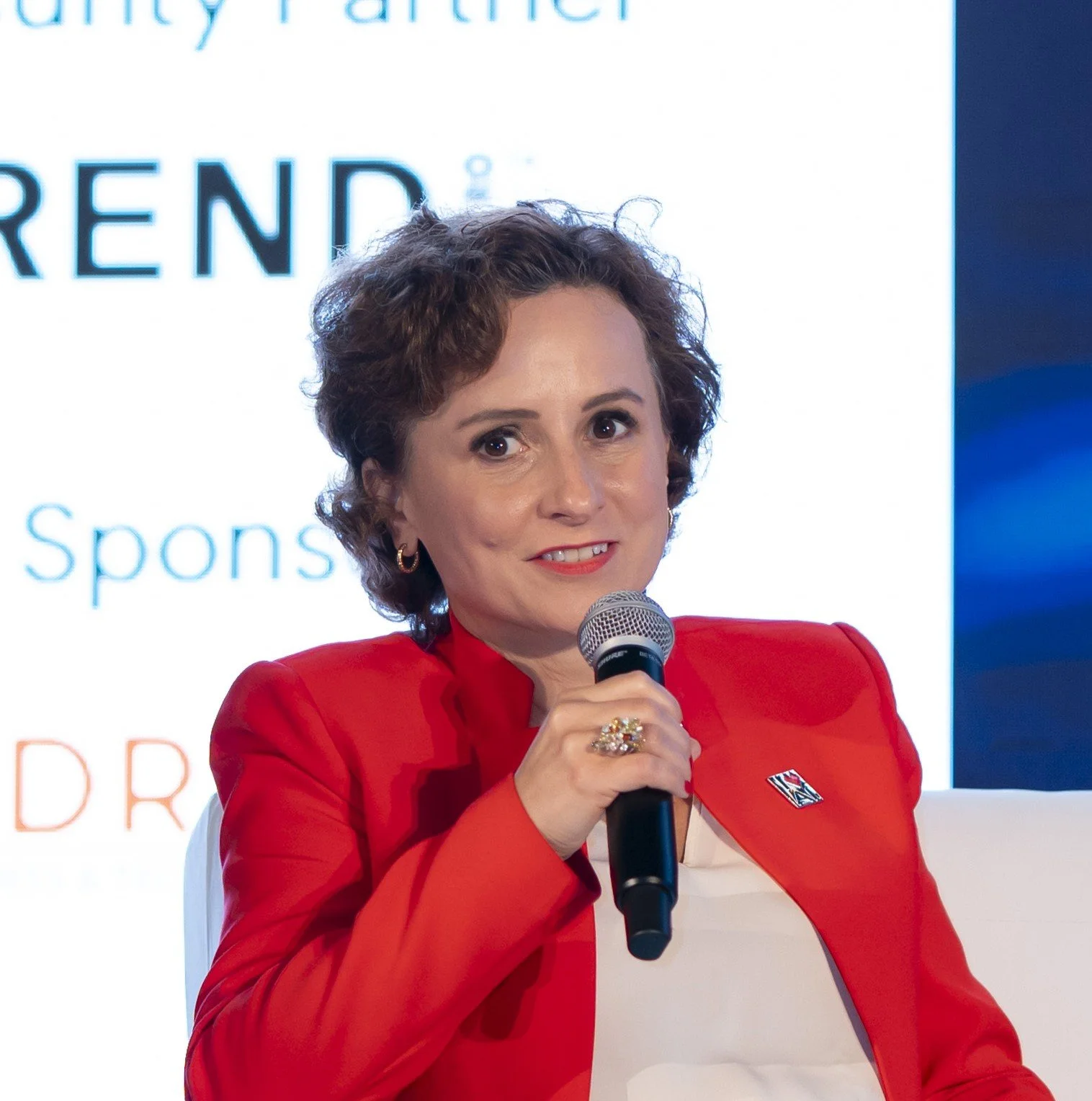
Dr Eva-Marie Muller-Stuler
